How to Create a Sunset-Inspired Garden Color Palette

A sunset garden is not a bed filled with orange flowers. It is a relationship between warm color, dark foliage, and the low light of evening. The same planting can look ordinary at noon and luminous at seven o’clock, once the sun drops and the garden takes on a softer, warmer cast. That shift is the whole point. You are not painting a static picture; you are designing for an hour that changes through the season.
The most reliable approach is to treat your border like a landscape at dusk. Deep greens provide the horizon. Oranges and pinks supply the glow. Purples add the shadows that make everything else feel richer. Get those four elements working together and you can create a sunset mood in a small front garden, a long border, or a collection of pots on a patio.
Start with observation, not a shopping list. Visit the space you want to plant in the late afternoon and again in the hour before sunset. Notice where the low light actually lands. A west-facing bed may catch a golden wash that makes orange flowers sing, while an east-facing border can lose its warmth early and look flat by evening. A white wall or a terracotta pot will bounce warm light back into the planting; a dark fence will absorb it.
This matters because sunset colors are not equally reliable. Hot orange can turn harsh in strong midday sun, and pale pink can look washed out against bright stone. Purple, on the other hand, often deepens in low light and gives the border weight. Deep green foliage holds the composition together when flowers fade. If you plant only blossoms and ignore foliage, the bed will look thin and restless.
Choose a site with at least a few hours of direct sun for the sun-loving plants mentioned here. Most of them also need decent drainage. If your soil is heavy, plant in raised beds or containers, or improve it with compost before planting. Good soil preparation is less glamorous than color planning, but it is what keeps a border full through summer.
Think of the palette as four roles rather than four random colors. Each has a job, and each keeps the others from becoming too sweet or too loud.
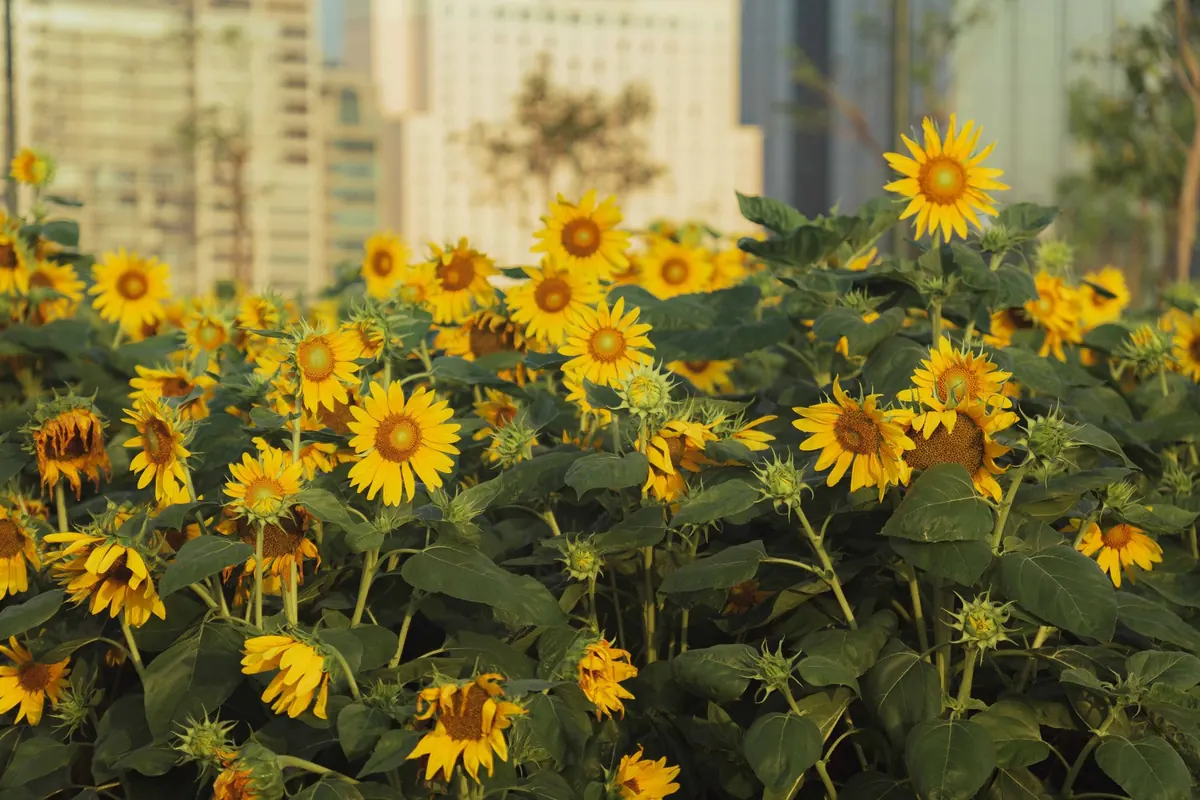
Use orange in a few strong clumps rather than scattered singles. Helenium, crocosmia, rudbeckia, zinnia, and calendula all bring dependable warmth. Vary the shade: burnt orange, apricot, copper, and clear tangerine read differently at dusk. Two or three orange plants repeated through a border will do more than ten different varieties dotted about.
Pink can make or break a sunset palette. Bubblegum pink can tip the whole border into candy colors. Look instead for salmon, coral, dusty rose, and deep magenta. Echinacea, penstemon, dahlias, and cosmos offer useful range. A little magenta near purple creates depth; a soft coral pink next to orange feels like the sky just after the sun has gone.
Purple is the color that gives the palette its evening weight. Salvia, verbena, nepeta, allium, and agastache are all useful, and dark purple foliage adds another layer. Purple bridges the gap between warm orange and cool green, which is why a border with oranges and pinks but no purple often feels unfinished.
Do not treat green as empty space between flowers. Yew, box, bay, euphorbia, ferns, and dark heucheras give the eye somewhere to rest. Deep green also makes orange look richer rather than louder. A dark green hedge or evergreen shrub behind a warm border can do more for the sunset effect than another packet of seed.
Orange without green is a traffic cone. Orange against deep green is a sunset.
Sunset colors work best when the planting has a clear structure. Put the tallest and darkest plants at the back, the warmest flowers in the middle, and lower, softer colors at the front. Repeat each plant in groups of three or five so the eye can follow a rhythm rather than jumping from one isolated flower to the next.
Resist the urge to fill every gap. A border needs breathing room, especially in early summer before perennials have reached full size. Plant for foliage first and flowers second; when the blooms pause, the bed should still look intentional.
Containers are the fastest way to test a sunset palette. You can move them into the best evening light, change the combination next year, and keep the colors close to a seating area where you will actually see them at dusk. Use a large pot, because small containers dry out too quickly and limit root space.
Terracotta pots suit this palette because their warm color picks up the oranges and pinks. Water consistently, feed container plants through the growing season, and deadhead regularly. A pot that looks tired by July will not carry the sunset effect into autumn.
A sunset is a progression, not a single moment, and a garden should work the same way. Start with spring bulbs and early perennials, follow with early-summer salvias and penstemons, then carry the border through late summer with helenium, dahlias, rudbeckia, and cosmos. Annuals can fill the gaps while perennials establish.
Leave some seedheads standing. They extend the season, feed birds, and catch low light in a way that flowers cannot. The goal is not a perfect week in July; it is a border that keeps changing from May to October. A few purple alliums in early summer and orange helenium in late summer can belong to the same story even though they never bloom together.
The hardest part of color design is restraint. Limit yourself to a small family of warm shades, one or two pinks, and a reliable group of purples. If a plant looks muddy beside its neighbours, move it. If a pink feels too sweet, add purple or dark foliage nearby. If orange dominates too aggressively, separate it with green.
Photograph the border at dusk every few weeks. The camera shows combinations that the eye skips over in real life. You will quickly see whether the orange is too scattered, the purple too thin, or the green not strong enough. Gardening is an iterative craft; moving one plant is often more useful than buying five new ones.
Choose a small area — a three-metre border or three matching containers — and plant the four-part palette in clear groups. Use deep green shrubs or foliage as the backbone, add one strong orange, one coral pink, and one purple, then repeat them. Water well in the first season, mulch to keep moisture in, and watch the bed at the same time each evening for a few weeks.
You do not need a large garden or an expensive planting scheme. You need the right relationship between warm color, shadow, and green structure. Start small, observe honestly, and adjust. The garden will tell you what the sunset wants.
Photo: Alexas_Fotos / Pixabay
Previous Post
A Beginner's Guide to Sunset Direction, Timing, and Viewing Angles
Next Post
Photographing Sunset Silhouettes: A Simple Beginner's Checklist